High-Fiber Bread: Which Breads Have the Most Fiber?
Which breads have the most fiber? Compare fiber, carbs and protein per slice, see what FDA fiber claims mean and learn what to check on a label.

✔ Reviewed by Dr. Sridevi Bellamkonda, MD (“Dr. B”) · Internal Medicine and Obesity Medicine · Reviewed November 2026
This article is for general information only and is not medical advice. Talk with your doctor or a registered dietitian before changing your diet, especially if you have diabetes or take medicine that lowers blood sugar.
Disclosure: LowCarb Avenue bakes and sells three of the breads discussed in this article.
Whole-wheat bread looks like the obvious choice when you want more fiber. USDA nutrient data tell a more complicated story: a slice of reduced-calorie white bread has about 2.2 grams of fiber, slightly more than the 1.9 grams in a slice of commercial whole-wheat bread. Which loaf comes out ahead depends on the recipe and the size of the slice, not the color of the crumb.
This guide compares common breads slice by slice, explains what “high fiber” means on a U.S. label, looks at where the fiber in high-fiber loaves comes from and covers how these breads fit a low-carb or keto plan.
The short answer: Under FDA rules, a bread can call itself a “good source” of fiber at 2.8 grams per 50-gram reference amount and “high fiber” at 5.6 grams, which works out to a little over 3 grams for a typical 28-gram slice. In USDA data, most common breads, whole wheat and rye included, have 1 to 2 grams per slice. Breads that reach 3 grams or more usually get there with bigger slices, sprouted grains and legumes, seeds or added fibers such as oat fiber and wheat fiber.
Which breads have the most fiber?
The table below uses USDA nutrient data for a standard slice of eight common breads. Slice weights range from 23 to 32 grams, so the table also scales each bread to the FDA’s 50-gram reference amount, which is the basis for claims on a label.
Disclosure: LowCarb Avenue bakes and sells the three Dr. B’s breads in the table. Their figures come from our printed nutrition labels, which round fiber to the nearest gram. Every other row comes from USDA data.
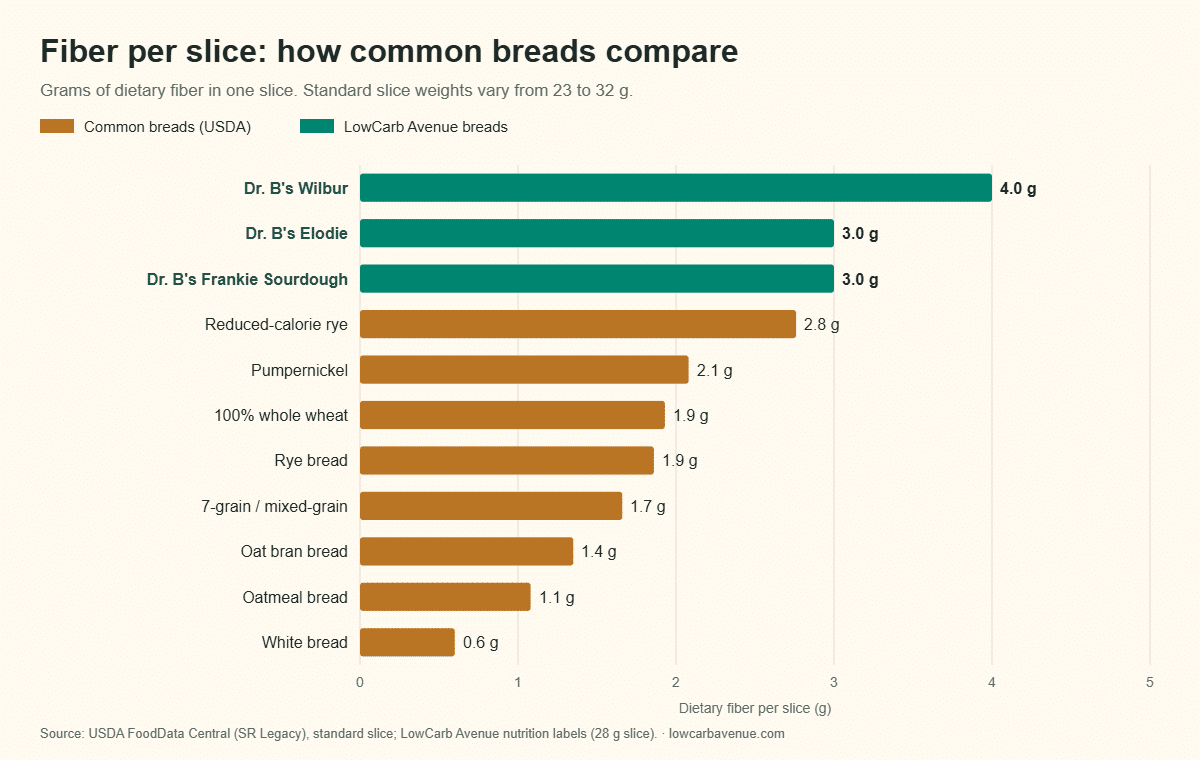
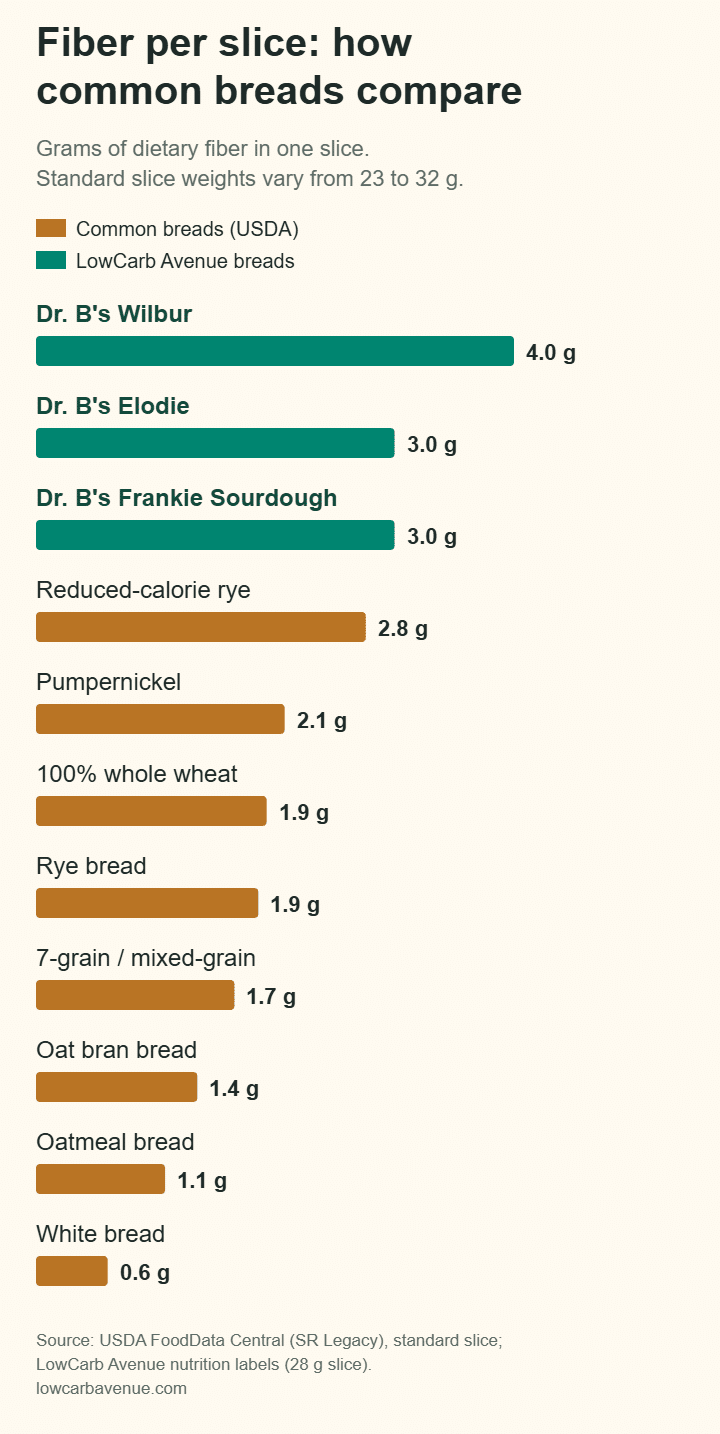
Swipe sideways to see the full table →
| Bread (one slice) | Slice weight | Fiber | Total carbs | Net carbs | Protein | Fiber per 50 g | FDA claim level* |
|---|---|---|---|---|---|---|---|
| White, commercial | 25 g | 0.6 g | 12.7 g | 12.1 g | 1.9 g | 1.2 g | None |
| Oatmeal | 27 g | 1.1 g | 13.1 g | 12.0 g | 2.3 g | 2.0 g | None |
| Oat bran | 30 g | 1.4 g | 11.9 g | 10.6 g | 3.1 g | 2.3 g | None |
| Mixed-grain / 7-grain | 26 g | 1.7 g | 12.1 g | 10.4 g | 2.6 g | 3.2 g | Good source |
| Rye | 32 g | 1.9 g | 15.5 g | 13.6 g | 2.7 g | 2.9 g | Good source |
| 100% whole wheat, commercial | 28 g | 1.9 g | 12.9 g | 11.0 g | 2.7 g | 3.4 g | Good source |
| Pumpernickel | 32 g | 2.1 g | 15.2 g | 13.1 g | 2.8 g | 3.2 g | Good source |
| Reduced-calorie rye | 23 g | 2.8 g | 9.3 g | 6.6 g | 2.1 g | 6.0 g | High |
| LowCarb Avenue breads (our labels) | |||||||
| Dr. B’s Frankie Sourdough | 28 g | 3 g | 6 g | 3 g | 6 g | 5.4 g | Good source† |
| Dr. B’s Elodie | 28 g | 3 g | 6 g | 3 g | 7 g | 5.4 g | Good source† |
| Dr. B’s Wilbur | 28 g | 4 g | 5 g | 1 g | 7 g | 7.1 g | High† |
*Calculated from the USDA averages and our rounded label values. “Good source” means 2.8 to 5.5 grams of fiber per 50 grams; “high” means 5.6 grams or more. †Formal claims are based on unrounded laboratory values. Wilbur contains 3 g total fat per slice, Frankie 2 g and Elodie 1.5 g. Individual brands vary, so check the package.
Names on the bag say little about fiber. “Oatmeal” bread averages 1.1 grams a slice and “7-grain” bread 1.7 grams, and neither name tells you how much of the loaf is whole grain. The ingredient list does.
The USDA’s reference whole-wheat bread counts as a good source of fiber but not a high-fiber bread: 1.9 grams a slice, or 3.4 grams per 50 grams, against the 5.6-gram threshold. Individual whole-wheat breads can contain considerably more, depending on their ingredients and slice weight. Rye, pumpernickel and mixed-grain breads fall in the same range in USDA data.
Reduced-calorie breads lead the USDA list. Reduced-calorie rye has 2.8 grams a slice, and the database’s reduced-calorie wheat and oat bran breads match it. Even reduced-calorie white bread, at 2.2 grams, edges out whole wheat. Ordinary white bread has 0.6 grams, which suggests the extra fiber comes from ingredients added to the recipe rather than from the flour.
Slice size matters too. Food For Life’s Ezekiel 4:9 sprouted whole grain bread lists 3 grams of fiber per slice from sprouted grains and legumes, with no isolated fiber in its ingredient list, but its slice weighs 34 grams and carries 15 grams of carbohydrate. Read fiber and slice weight together.
What “high fiber” means on a bread label
Two different rules shape what you see on a package.
The first is the % Daily Value on the Nutrition Facts panel. The FDA sets the Daily Value for fiber at 28 grams; by its rule of thumb, 5% DV or less per serving is low and 20% DV or more is high.
The second governs the words on the front of the bag. For bread, the FDA measures claims against a 50-gram reference amount, about two thin slices or one thick one. A bread may say “good source of fiber” when 50 grams supplies 10% to 19% of the Daily Value (2.8 to 5.5 grams), and “high fiber,” “rich in fiber” or “excellent source of fiber” at 20% or more (5.6 grams). For a typical 28-gram slice, those thresholds are about 1.6 and 3.1 grams.
Two details are easy to miss. Manufacturers base formal claims on unrounded laboratory values, so the rounded number on the panel is a guide rather than the final word. And a bread that isn’t low in fat has to show its total fat next to any fiber claim.
Where the extra fiber comes from
Since 2016, the FDA has counted two kinds of dietary fiber on the Nutrition Facts label. One is fiber that is naturally intact in plants, such as the bran in whole wheat. The other is isolated or synthetic fiber that the agency has found to have a physiological benefit, such as lowering blood sugar or cholesterol or improving regularity. The 2016 rule named seven, including psyllium husk, beta-glucan, cellulose and pectin. In 2018 the FDA said it intends to add eight more, among them mixed plant cell wall fibers, inulin, resistant maltodextrin and high-amylose (resistant) starch, and it has named a few others since.
On an ingredient list, these usually appear as oat fiber, wheat fiber, chicory root fiber or inulin, soluble corn fiber, resistant wheat starch or psyllium husk.
Most of the research linking fiber to longer, healthier lives studied fiber from whole foods: whole grains, beans, vegetables and fruit. An isolated fiber on the FDA’s list has evidence for at least one benefit, but that doesn’t mean it does everything a plant-rich diet does. Mayo Clinic makes a similar point about fiber supplements, saying whole foods are generally better. Count a high-fiber bread toward your daily total, then get the rest from vegetables, beans, nuts and seeds.
For a closer look at the fibers used in low-carb breads, see our wiki guide to added fibers in keto bread.
Why fiber matters, especially after 50
Most Americans fall short. In the most recent national survey data available, What We Eat in America (NHANES 2017–March 2020), adults averaged about 16.6 grams of fiber a day. The National Academy of Medicine’s Adequate Intake for adults over 50 is 21 grams for women and 30 grams for men, and the federal Administration for Community Living estimates that 95% of adults don’t get enough. Two slices of commercial whole-wheat bread supply about 3.9 grams, less than a fifth of a woman’s daily target.
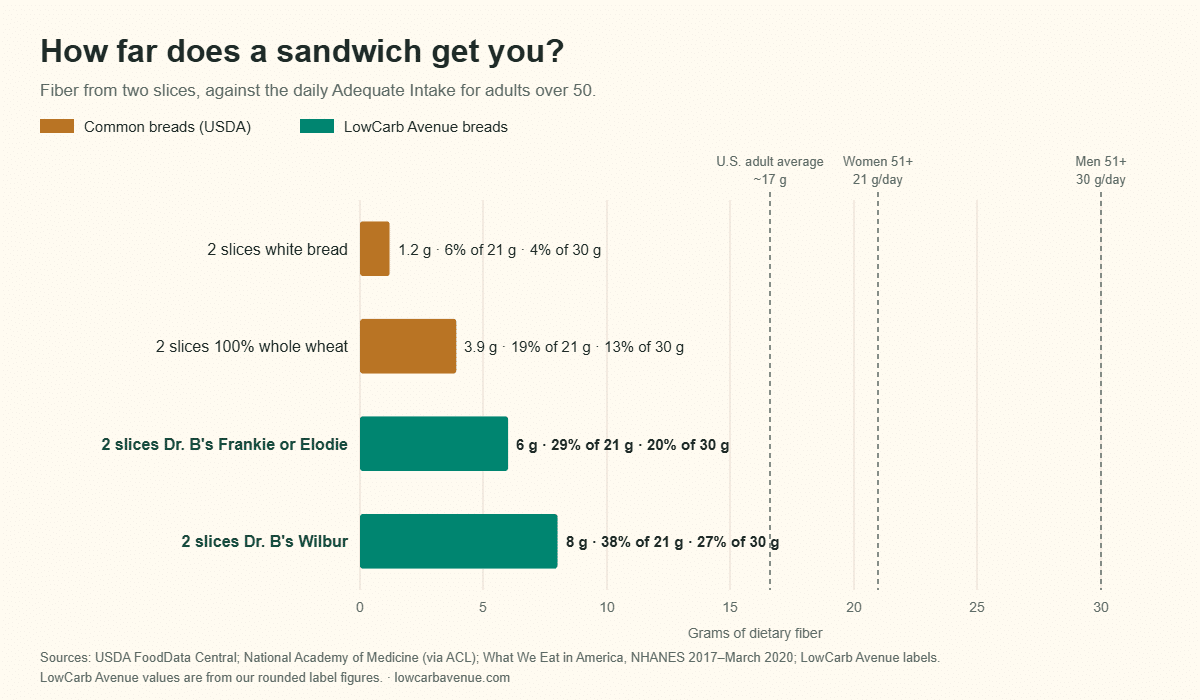
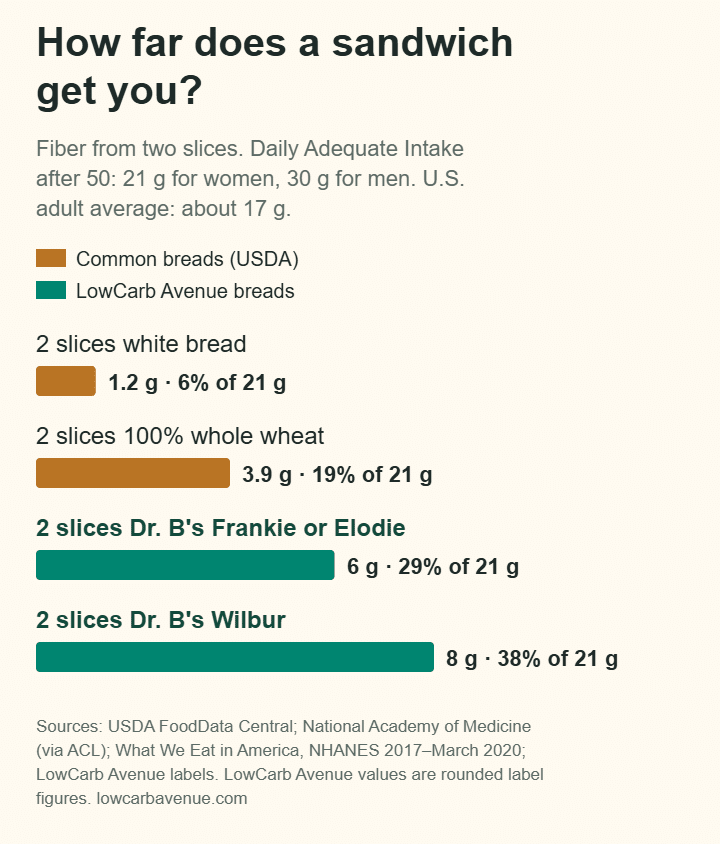
The strongest evidence on fiber and long-term health appeared in The Lancet in 2019. A University of Otago team, commissioned by the World Health Organization, pooled 185 prospective studies and 58 clinical trials. People who ate the most fiber were 15% to 30% less likely to die from any cause or from cardiovascular disease than people who ate the least, with lower rates of heart disease, stroke, type 2 diabetes and colorectal cancer. The benefits were greatest at 25 to 29 grams a day, and the dose-response data suggested more could help further.
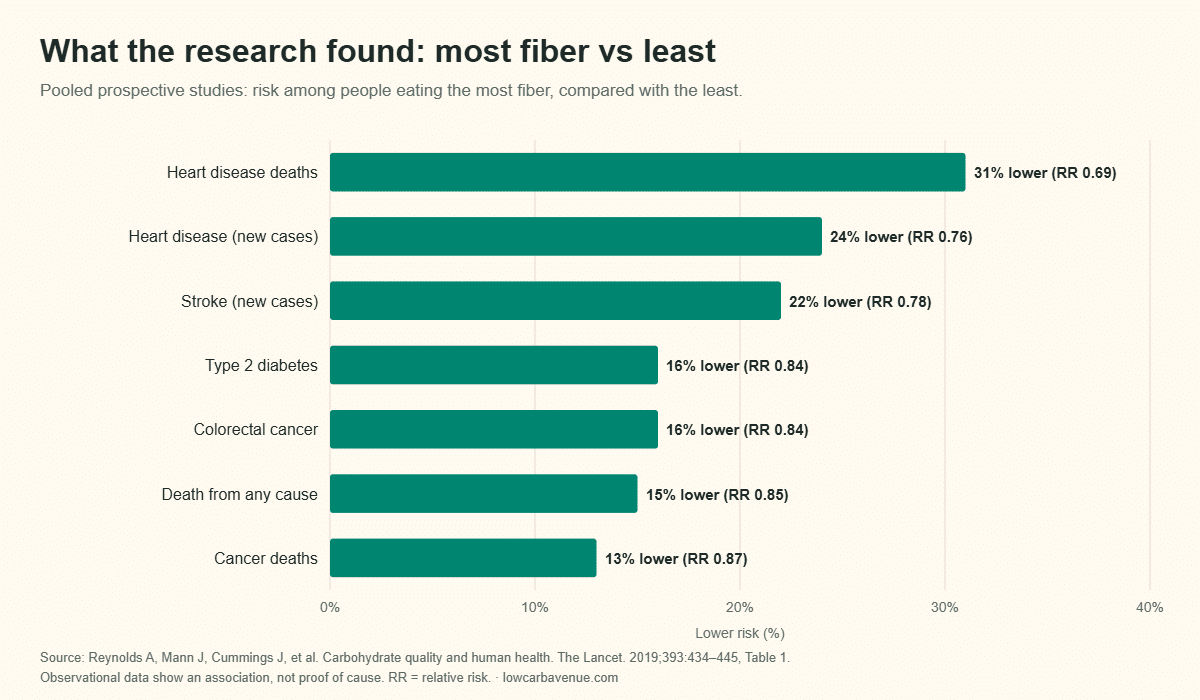
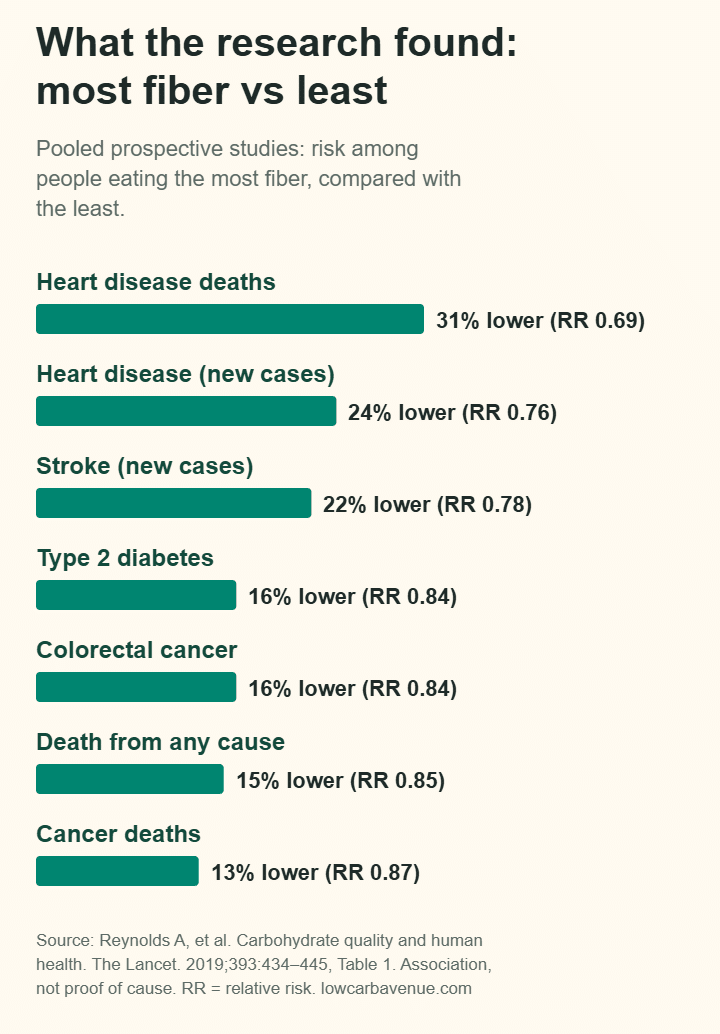
These long-term studies show an association, not proof of cause, and the percentages are relative risks: the absolute difference for any one person is smaller and depends on their starting risk. The clinical trials in the same review strengthen the case, showing lower body weight, blood pressure and total cholesterol on higher-fiber diets.
Fiber also matters for digestion. It adds bulk to stool and softens it, which makes constipation less likely.
Federal advice now points the same way. The 2025–2030 Dietary Guidelines for Americans, released in January 2026, tell Americans to prioritize fiber-rich whole grains and to sharply cut back on highly processed, refined carbohydrates, with white bread as the first example.
High-fiber bread and diabetes
In 2020 the Otago researchers turned to diabetes. Across 42 trials in adults with prediabetes, type 1 or type 2 diabetes, they reported in PLOS Medicine that higher-fiber diets improved HbA1c, fasting glucose, insulin resistance and cholesterol. Drawing on long-term cohort data, they suggested adding about 15 grams a day, or reaching 35 grams in total, as a reasonable target.
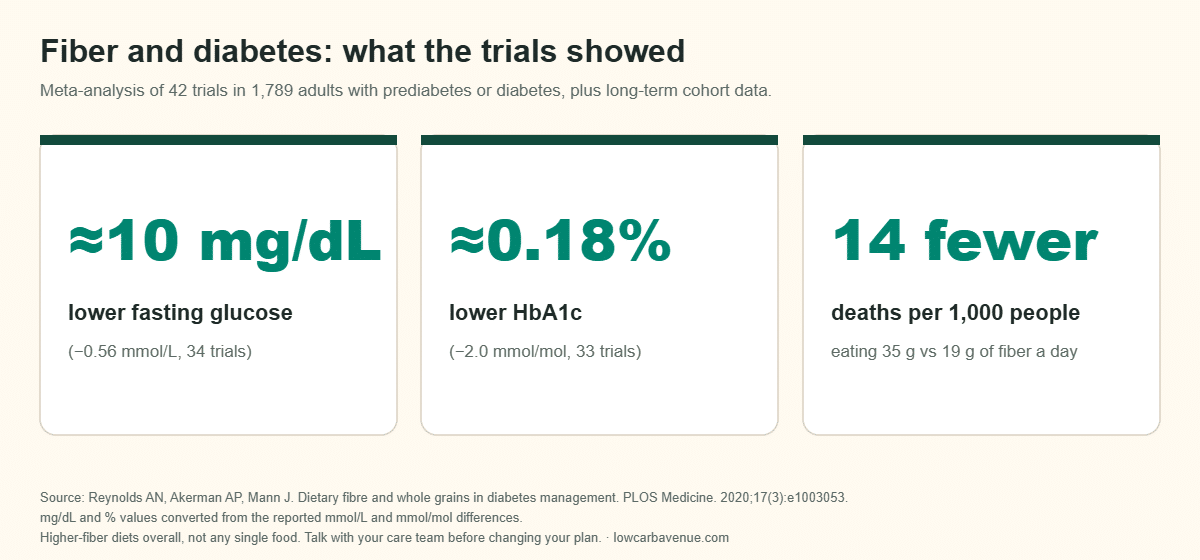
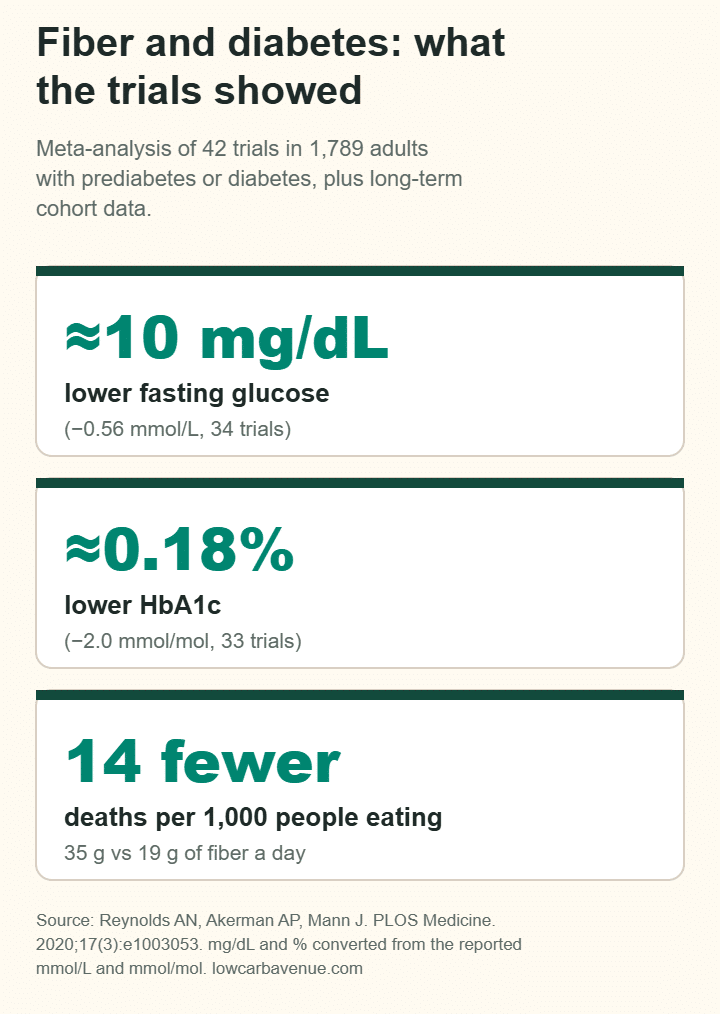
Those results come from higher-fiber diets overall, not from any single food. Fiber alone doesn’t determine how a bread will affect your blood sugar: total carbohydrate, serving size, ingredients and your own glucose response all matter. If you have diabetes, follow the carbohydrate guidance from your care team and check your response with a meter or continuous glucose monitor. Our guide to reading bread labels for diabetes goes through the panel line by line.
High-fiber bread on a low-carb or keto plan
Low-carb shoppers usually track net carbs: total carbohydrate minus fiber. The FDA doesn’t define the term, and some brands also subtract sugar alcohols, so in this article net carbs simply means total carbohydrate minus dietary fiber, using the label or USDA values shown (how to calculate net carbs).
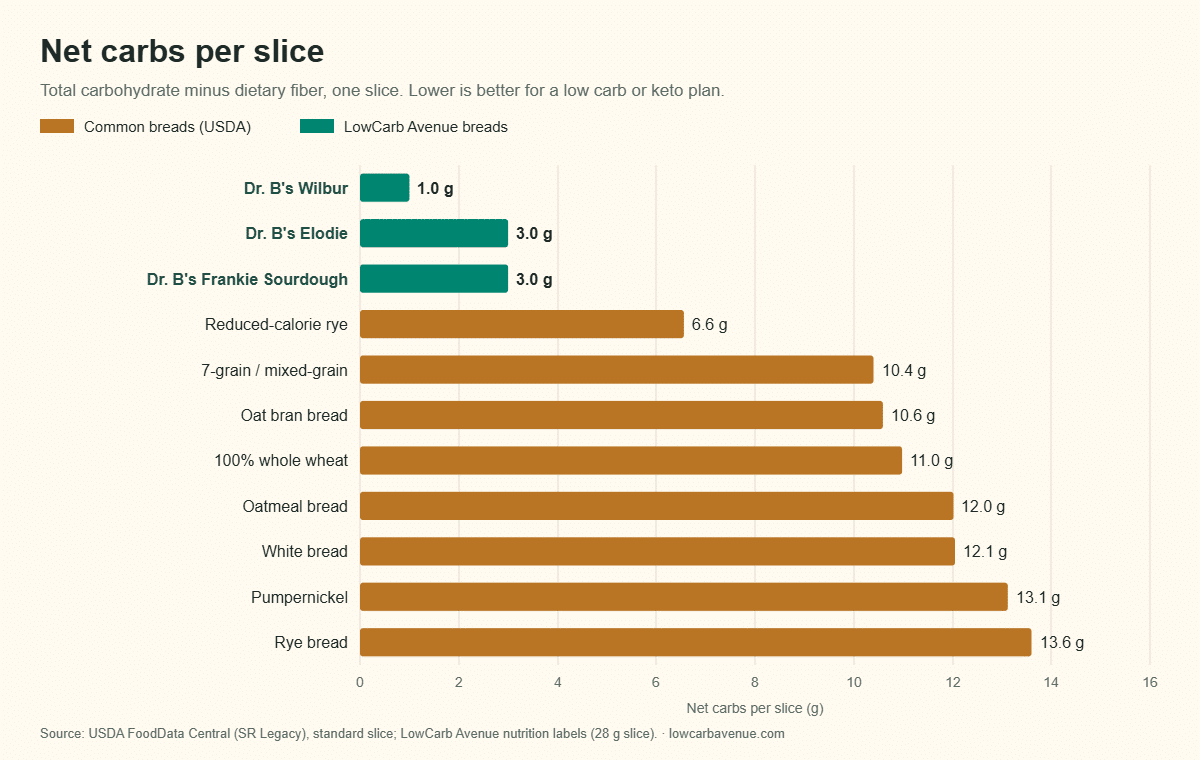
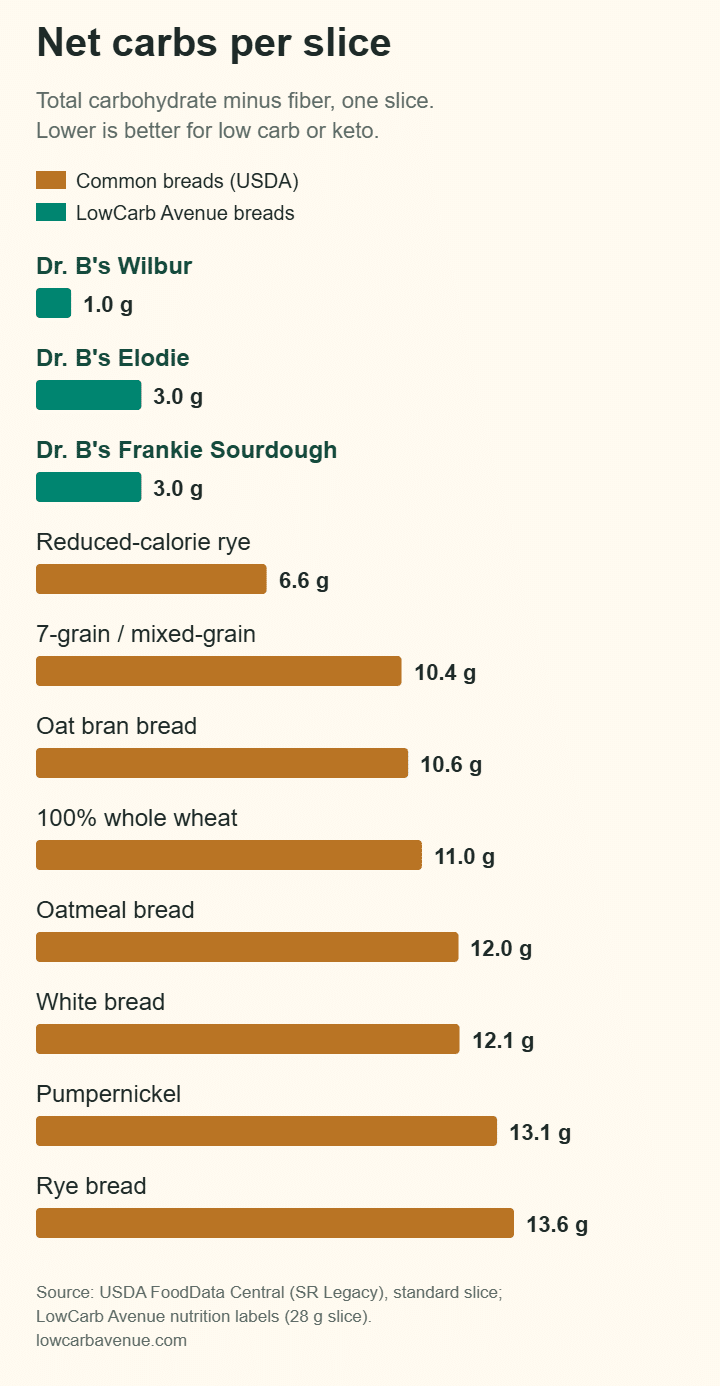
Ordinary bread is a hard fit. Ketogenic diets typically limit carbohydrate to about 20 to 50 grams a day; some plans count total carbs and others count net carbs. Two slices of commercial whole-wheat bread carry about 26 grams of total carbohydrate, or 22 grams net, before you add a filling.
Net carbs can also flatter a label. A slice with 20 grams of carbohydrate and 19 grams of added fiber can be marketed as “1 net carb,” just like a slice that starts with 5 grams in total, yet they are very different foods. Look at total carbohydrate too.
Our breads, per slice. Dr. B’s Wilbur: 5 g total carbs · 1 g net carb · 4 g fiber · 7 g protein · 65 calories. Meets the FDA’s high-fiber level; 3 g total fat per slice. Dr. B’s Frankie Sourdough and Dr. B’s Elodie: 6 g total carbs · 3 g net carbs · 3 g fiber · 6–7 g protein · 0 g sugar. A good source of fiber; 2 g (Frankie) and 1.5 g (Elodie) total fat per slice.
How to choose a high-fiber bread: a six-point label check
- Read the grams, not the banner. “Multigrain,” “wheat” and “made with whole grains” describe ingredients, not fiber content. Go straight to the fiber line.
- Check the slice weight. A bigger slice usually has more fiber. To compare fairly, divide the grams of fiber by the slice weight and multiply by 50. At 5.6 or more, you are looking at a high-fiber bread.
- Read the ingredient list. If you want intact whole grains, a whole grain should be listed first. Added fibers are named there too.
- Look at total carbohydrate and sugar. A high-fiber bread with 20 grams of carbohydrate still has 20 grams of carbohydrate.
- Check the protein. Protein and fiber together make a slice more filling. Ordinary breads in USDA data have about 2 to 3 grams of protein a slice.
- Glance at the sodium. A slice of commercial whole-wheat bread has about 150 milligrams. Two slices plus deli meat and cheese add up fast.
Adding fiber without the discomfort
If you eat little fiber now, add it slowly. Mayo Clinic dietitian Kate Zeratsky advises raising your intake gradually and drinking plenty of water, and the Administration for Community Living warns that increasing fiber too quickly can cause gas, bloating and cramping.
One practical approach is to swap one daily serving of bread for a higher-fiber loaf, give your body a couple of weeks to adjust, then look at the rest of your plate. Whole foods add up quickly: a cup of cooked lentils has about 15 grams of fiber, according to Harvard’s Nutrition Source.
About our breads
Dr. Sridevi Bellamkonda, a bariatric physician who practiced at Johns Hopkins, created our breads so her patients who were cutting carbs could still enjoy real bread. It started small, with about ten loaves a week baked at a local bakery for the patients who needed them. Word spread, families asked to have loaves shipped to relatives in other states, and her daughter, Sam, turned it into LowCarb Avenue. We watch total carbohydrates as closely as net carbs, and we don’t use filler flours.
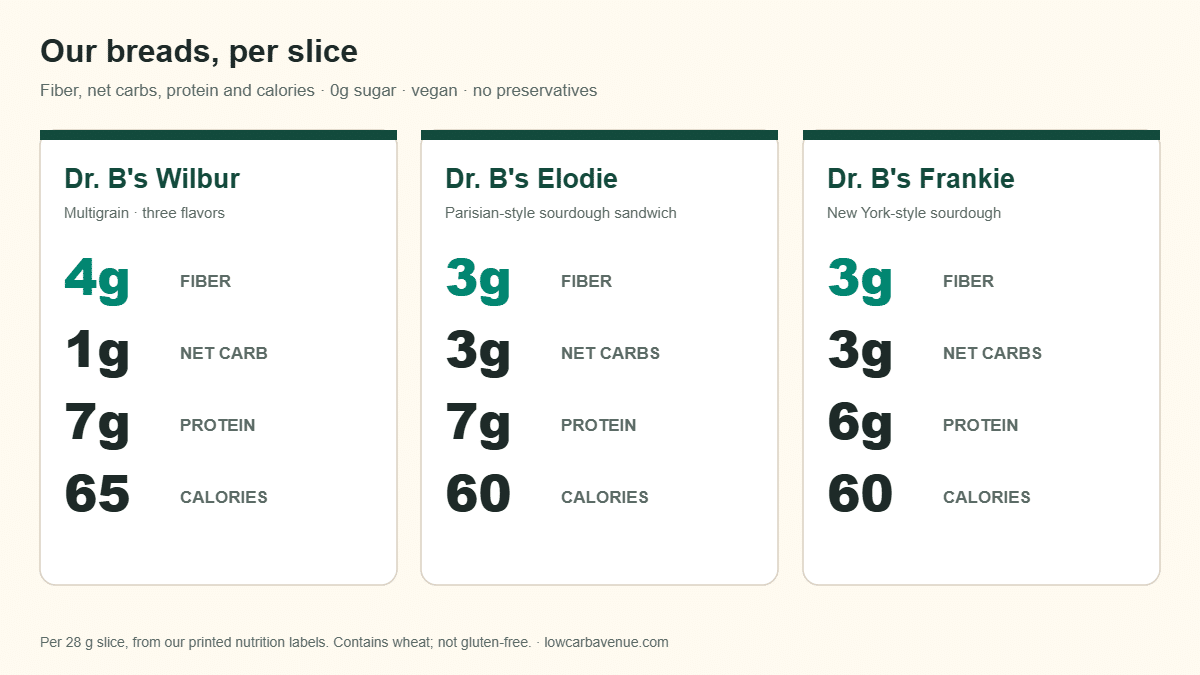
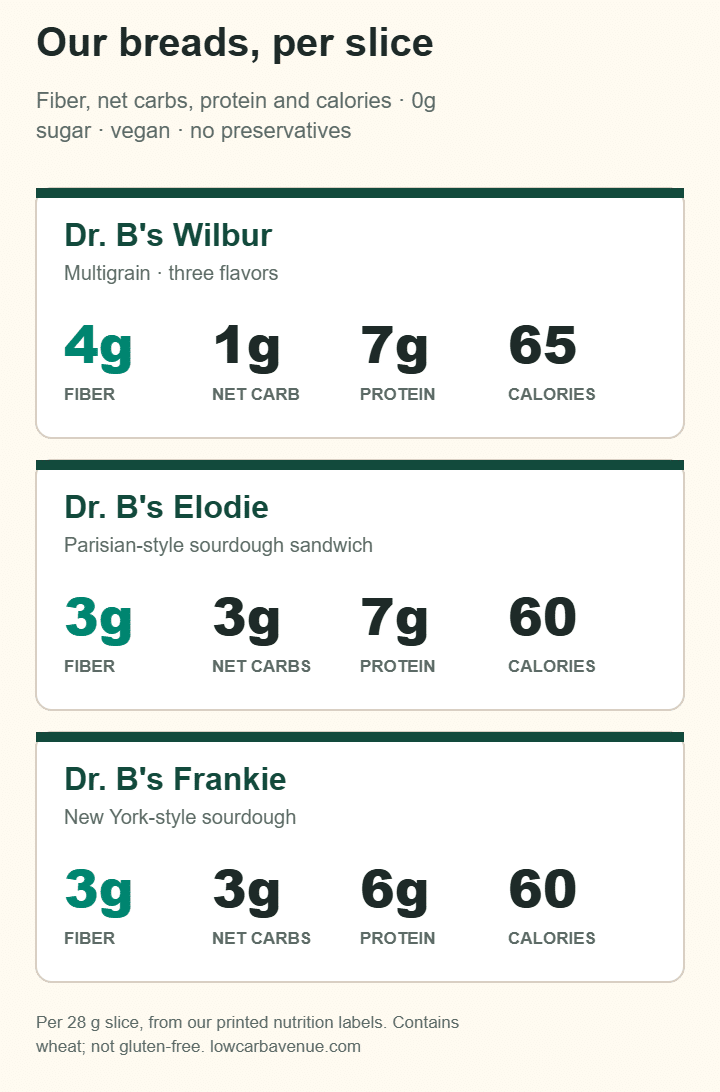
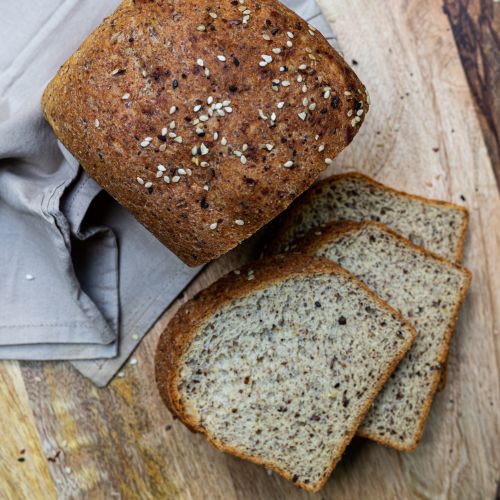
- Dr. B’s Wilbur (Plain, Sesame, Everything): 4 g fiber · 5 g total carbs · 1 g net carb · 7 g protein · 65 calories per slice. At 7.1 grams of fiber per 50 grams by our rounded label values, it meets the FDA’s high-fiber level, with 3 grams of total fat per slice. Its fiber comes from added oat fiber and wheat fiber together with almond flour, ground flaxseed and dark rye.
- Dr. B’s Elodie, a Parisian-style sourdough sandwich loaf made with starter and a touch of yeast: 3 g fiber · 3 g net carbs · 7 g protein · 60 calories per slice.
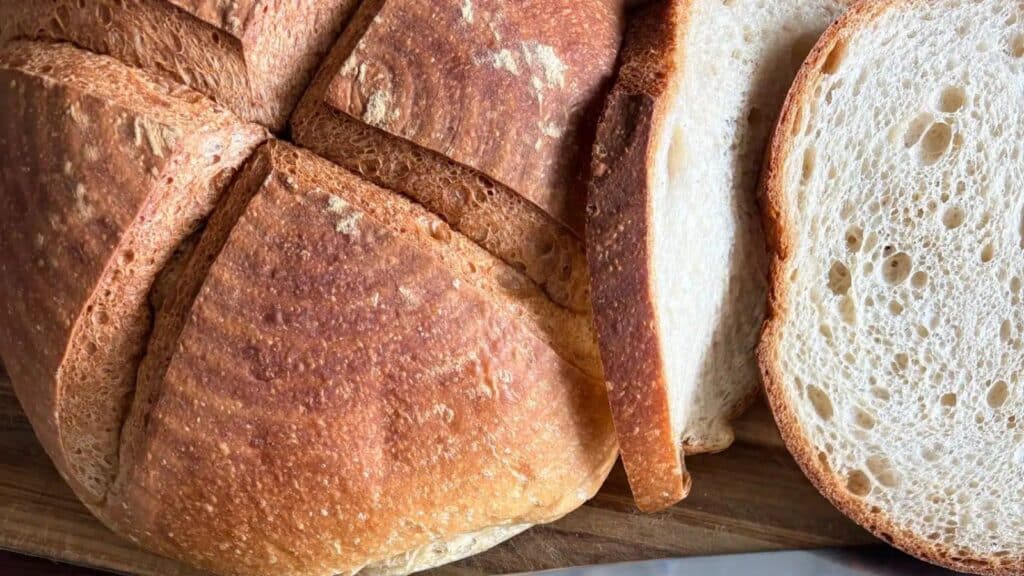
- Dr. B’s Frankie Sourdough, a New York–style sourdough boule: 3 g fiber · 3 g net carbs · 6 g protein · 60 calories per slice.
Frankie and Elodie get their fiber from a high-fiber wheat flour, as listed on our labels, and added wheat protein raises their protein. By our rounded label values (5.4 grams of fiber per 50 grams), both are a good source of fiber, with 2 grams (Frankie) and 1.5 grams (Elodie) of total fat per slice.
Every slice has 0 g sugar. The breads are vegan, made without preservatives and contain no psyllium. Because there are no preservatives, we ship them frozen nationwide; put them in the freezer as soon as they arrive. All three contain wheat, so they are not suitable for a gluten-free diet.
Frequently asked questions
Which type of bread has the most fiber?
In USDA data, reduced-calorie breads lead at about 2.8 grams a slice, with pumpernickel, whole wheat and rye close together at around 2 grams. Breads made with sprouted grains, seeds or added fibers can go higher, so check the label and the slice weight.
Is whole-wheat bread high in fiber?
Not usually. The USDA’s reference loaf has about 1.9 grams a slice, enough for a “good source” claim per 50 grams but short of “high fiber.” Some brands contain more, so compare labels.
Is high-fiber bread good for people with diabetes?
Higher-fiber diets may support blood sugar management, but fiber alone doesn’t determine how a bread will affect glucose levels. Total carbohydrate, serving size, ingredients and individual glucose response also matter. People living with diabetes should follow the carbohydrate guidance from their healthcare team.
Does keto bread count as high-fiber bread?
Some does. A 28-gram slice needs a little over 3 grams of fiber to reach the FDA’s high-fiber level. Many keto breads get there with added fibers, so check where the fiber comes from and look at total carbohydrate as well as net carbs.
How much fiber should I eat in a day?
The FDA’s Daily Value is 28 grams. The National Academy of Medicine’s targets for adults over 50 are 21 grams for women and 30 grams for men.
Medical disclaimer: This article is for general information and education only. It is not medical advice and is not a substitute for advice from your own doctor or registered dietitian, who knows your health history. If you have diabetes, kidney disease or a digestive condition, or you take medicine that affects blood sugar, ask your care team before making changes to your diet.
Sources
- U.S. Department of Agriculture, FoodData Central (SR Legacy), per-slice values via the University Hospitals Health Library: white bread, whole-wheat bread, rye, pumpernickel, mixed-grain, oatmeal, oat bran, reduced-calorie rye, reduced-calorie wheat, reduced-calorie white. Accessed November 2026.
- U.S. Food and Drug Administration. Dietary Fiber (Interactive Nutrition Facts Label).
- Code of Federal Regulations. 21 CFR 101.54, nutrient content claims for “good source,” “high” and fiber; 21 CFR 101.12, reference amounts customarily consumed (bread: 50 g).
- U.S. Food and Drug Administration. Questions and Answers on Dietary Fiber; Guidance for Industry: The Declaration of Certain Isolated or Synthetic Non-Digestible Carbohydrates as Dietary Fiber (2018).
- Reynolds A, Mann J, Cummings J, Winter N, Mete E, Te Morenga L. Carbohydrate quality and human health: a series of systematic reviews and meta-analyses. Lancet. 2019;393(10170):434-445.
- Reynolds AN, Akerman AP, Mann J. Dietary fibre and whole grains in diabetes management: systematic review and meta-analyses. PLOS Medicine. 2020;17(3):e1003053.
- USDA Agricultural Research Service. What We Eat in America, NHANES 2017–March 2020 Prepandemic, Table 1: Nutrient intakes from food and beverages.
- Administration for Community Living. Nutrition Needs for Older Adults: Fiber.
- Mayo Clinic. Dietary fiber: Essential for a healthy diet; Mayo Clinic News Network. Mayo Clinic Minute: The importance of dietary fiber (January 2018).
- U.S. Department of Agriculture and U.S. Department of Health and Human Services. Dietary Guidelines for Americans, 2025–2030: fact sheet (January 2026).
- Harvard T.H. Chan School of Public Health, The Nutrition Source. Dietary Guidelines for Americans 2025-2030 (January 9, 2026).
- Masood W, et al. Ketogenic Diet. StatPearls. StatPearls Publishing.
- Food For Life. Ezekiel 4:9 Sprouted Whole Grain Bread, Nutrition Facts (1 slice, 34 g), as listed at Target.com. Accessed November 2026.
- LowCarb Avenue. Nutrition Facts and ingredients for Dr. B’s Frankie Sourdough, Elodie and Wilbur.