The History of Bagels: From Kraków to New York to Sourdough
From a 1610 Kraków record to New York bakeries to 25g-protein sourdough: the real history of bagels, why they're boiled, and how they changed.

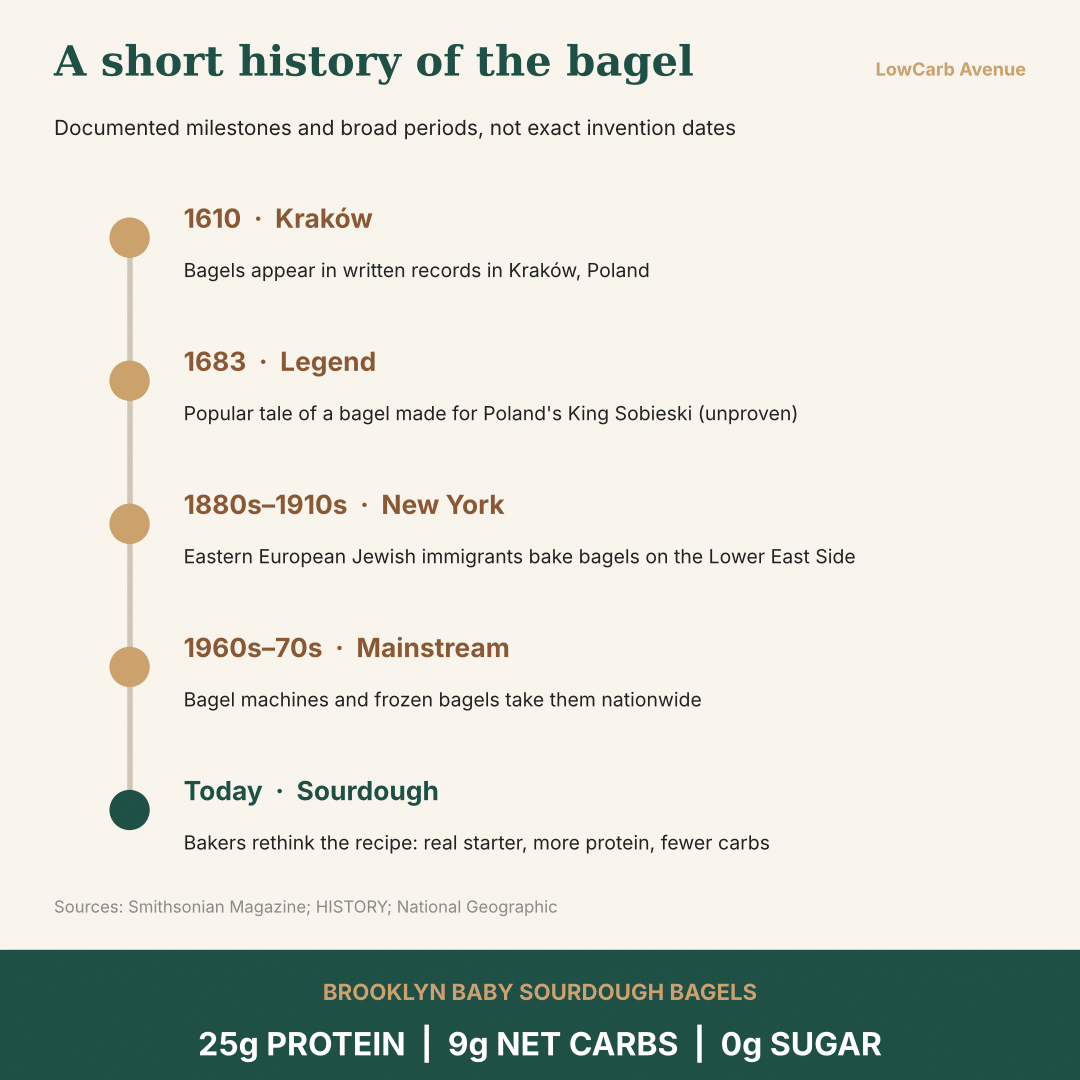
The short answer: Written records from Kraków, Poland, mention bagels as early as 1610. Eastern European Jewish immigrants carried the craft to New York’s Lower East Side in the late 1800s, machines and frozen bagels made them a national breakfast by the 1970s, and today bakers are going back to slow sourdough fermentation, some with far more protein and far fewer carbs.
You’ve probably never thought of your morning bagel as a 400-year-old document. It is.
Before Brooklyn, before lox, before the toaster, there was a ring of boiled dough in Poland. That’s where the paper trail starts.
Before New York, there was Kraków
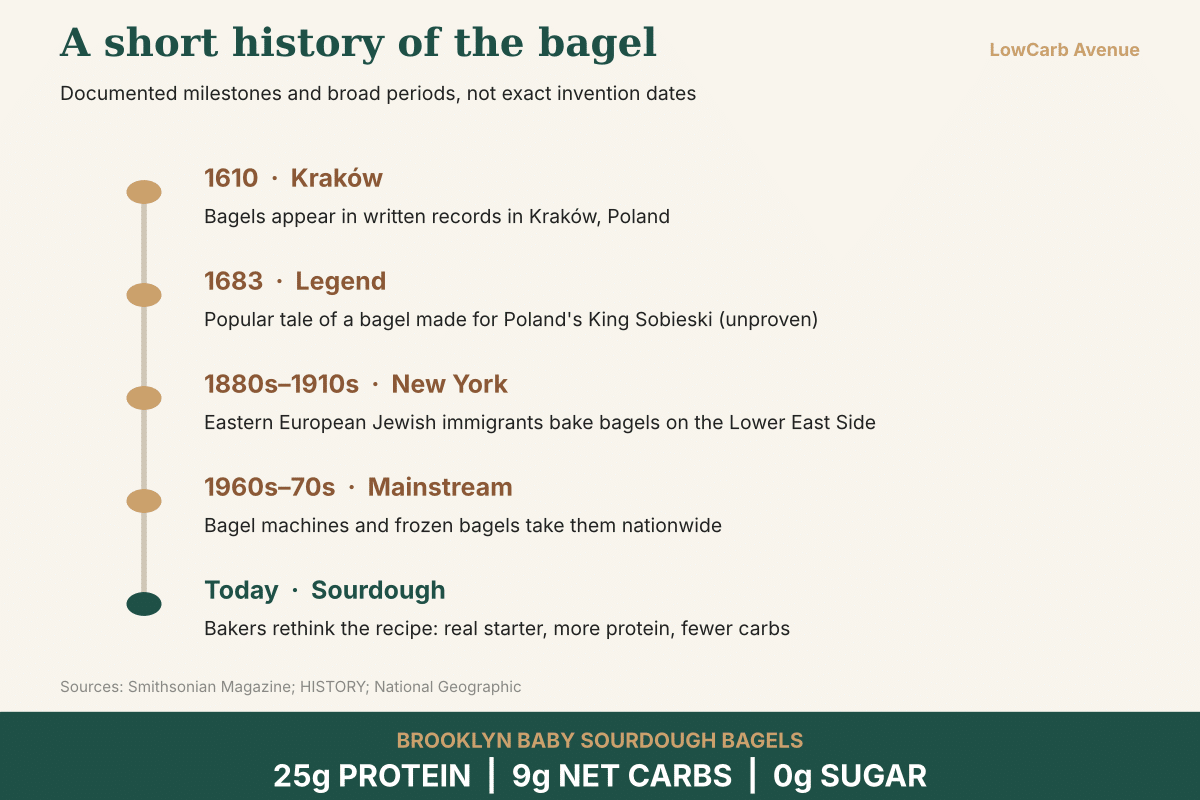
By 1610, bagels had already made it into the written record in Kraków (Smithsonian). That’s the oldest reference most historians point to. It names no inventor.
The ring itself is older. Poland’s obwarzanek, a braided, boiled-then-baked cousin still sold from street carts in Kraków today, shows up in records from 1394.
Bagels meant more than breakfast. In Eastern European Jewish tradition, they were a customary food for women who had just given birth: a round, endless shape for a new life (National Geographic). They were also practical. The hole made them easy to stack on a pole and carry to market.
The 1683 myth
You may have heard that a Viennese baker shaped the first bagel in 1683 to thank Poland’s King Jan Sobieski after the Battle of Vienna, the ring supposedly mimicking a stirrup. The dates don’t work. Kraków was writing about bagels 73 years before that battle was fought.
How New York made the bagel its own
In the late 1800s and early 1900s, Eastern European Jewish immigrants brought the bagel to New York’s Lower East Side (HISTORY). Small cellar bakeries turned them out by the thousands, and neighbors bought them warm on the way to work.
The work was brutal. Rollers shaped stiff dough by hand, boiled it in kettles and baked it through the night. In 1907, New York’s bagel bakers banded together and formed their own union to protect their wages and their craft (National Geographic).
The method didn’t change: shape, boil, bake. Everything around it was about to.
Watch the history
▶ Video: “How the New York City Bagel Was Born”
New York University (2020). A short look at how Eastern European bakers turned the bagel into a New York icon.
When the bagel went mainstream (and got bigger)
Automatic bagel-making machines arrived in the 1960s. Companies began selling pre-sliced frozen bagels in grocery freezers. By the 1970s, the bagel had escaped its New York niche and landed on breakfast tables across the country (Smithsonian; National Geographic).
Mass production changed the bagel itself.
It ballooned. The National Heart, Lung, and Blood Institute compares a typical bagel from about 20 years earlier, roughly 3 inches across and 140 calories, with today’s 6-inch bagel at about 350 calories (NHLBI Portion Distortion). Same breakfast, more than double the food.
It got faster. Many factory and supermarket bagels skip the long, cold rest that old bakeries relied on. Fast-acting commercial yeast, dough conditioners and short proofs keep lines moving. Some aren’t boiled at all, just steamed or baked, which is why they taste like round bread rolls.
It got harder on blood sugar. A big bagel made from refined white flour is mostly fast-digesting starch. White bagels rank around 70 on the glycemic index, in the same range as white bread (Atkinson et al., 2008). Multiply that by a 6-inch portion and you get a heavy carb load before the cream cheese goes on.
That’s the backdrop for what bakers are doing now: going back to slow fermentation, and rethinking the flour.
One bagel, plenty of opinions
Ask a New Yorker and a Montrealer what makes a proper bagel, and clear your afternoon.
A New York bagel tends to be big, with a crackly crust around a softer middle. Montreal’s version is smaller and denser, with a hint of sweetness: bakers simmer the dough in water sweetened with honey, then finish it in a wood-burning oven (HISTORY).
| Style | Size and texture | How it’s made |
|---|---|---|
| New York | Larger, crusty outside, softer inside | Boiled in water, baked in a conventional oven |
| Montreal | Smaller, denser, a little sweet | Simmered in honey-sweetened water, baked in a wood-burning oven |
| Brooklyn Baby | Classic chew, 86g bagel | Real sourdough starter, high-protein dough, 9g net carbs |
For scale: National Geographic reported a projection that roughly 202 million people in the U.S. would eat bagels during 2020. That counts people, not bagels, in one country, for one year (National Geographic).
Why are bagels boiled before baking?
Here’s the step that makes a bagel a bagel.
Each shaped ring takes a 30- to 60-second swim in hot water. The heat instantly gelatinizes the starch on the surface, turning it into a thin, set skin. That skin does two things. It stops the dough from puffing up in the oven, so the inside stays tight and dense. And it bakes into a shiny, slightly blistered crust with real snap.
The oven adds the browning and toasty flavor. Historically, bakers sometimes added malt or lye to the water for a deeper, darker crust (HISTORY).
Skip the boil and you get bread. Good bread, maybe. Not a bagel.
How does sourdough fermentation change a bagel?
A sourdough starter is a living culture of wild yeasts and lactic acid bacteria, fed on flour and water. Given time, it reshapes the dough.
- Flavor: acids and aromatic compounds build a tangy, deeper taste than yeast alone.
- Texture: slow fermentation strengthens the dough’s structure, which supports that classic chew.
- Digestion: long fermentation can break down some fructans, a type of FODMAP that bothers some people with IBS (Monash University FODMAP).
Keep the claims honest, though. “Sourdough” describes fermentation, not nutrition. A sourdough bagel made from refined white flour can still carry 50-plus grams of carbs. To know what you’re eating, read the nutrition label, or check it with our net carb calculator. For a deeper look, see our guide to low carb sourdough vs. regular sourdough.
So what does a modern bagel look like?
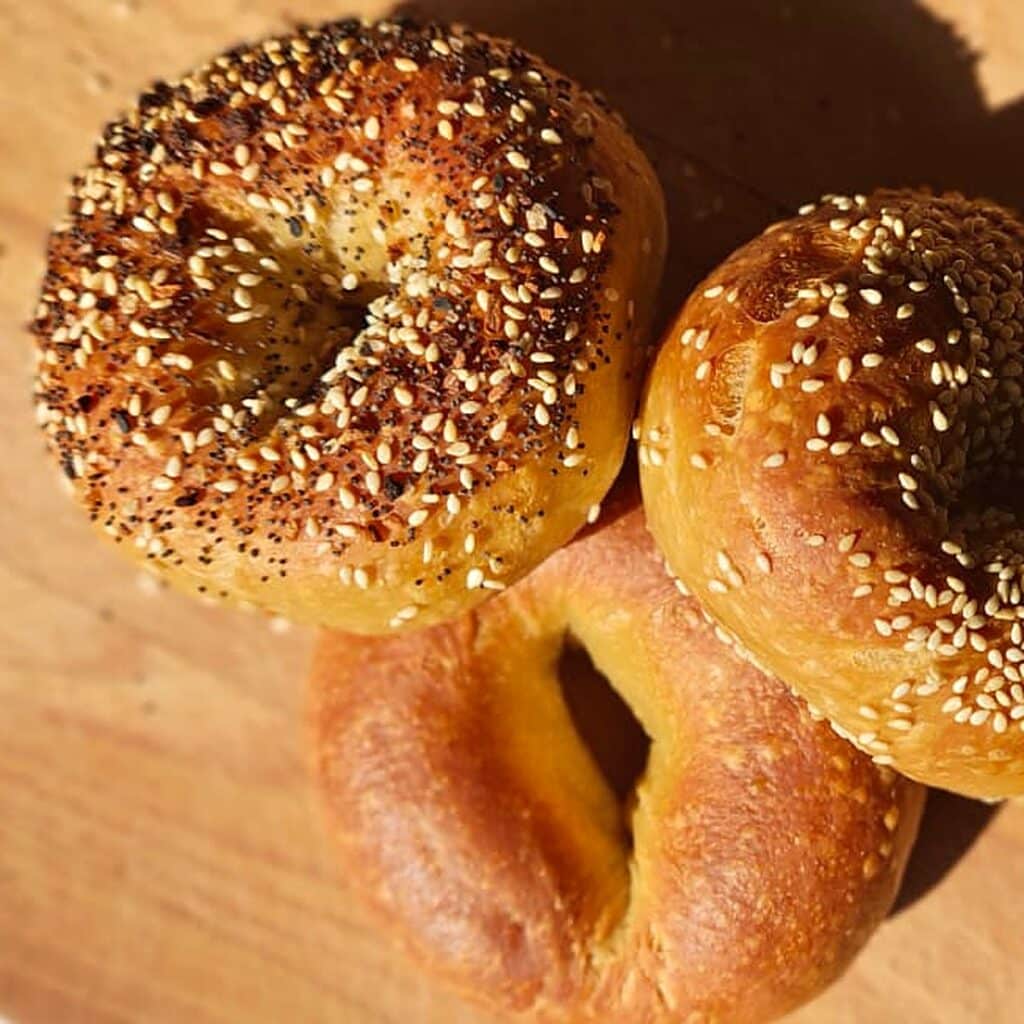
That question is close to home for us. At LowCarb Avenue, our family-run bakery in Frederick, Maryland, we make Brooklyn Baby bagels: real sourdough, boiled and baked, in Plain, Sesame and Everything.
The goal was simple. Keep the crust, the chew and the ritual. Change what’s inside. Instead of a dough built on refined flour alone, ours is made with high-fiber wheat flour, wheat protein, olive oil and a real sourdough starter.
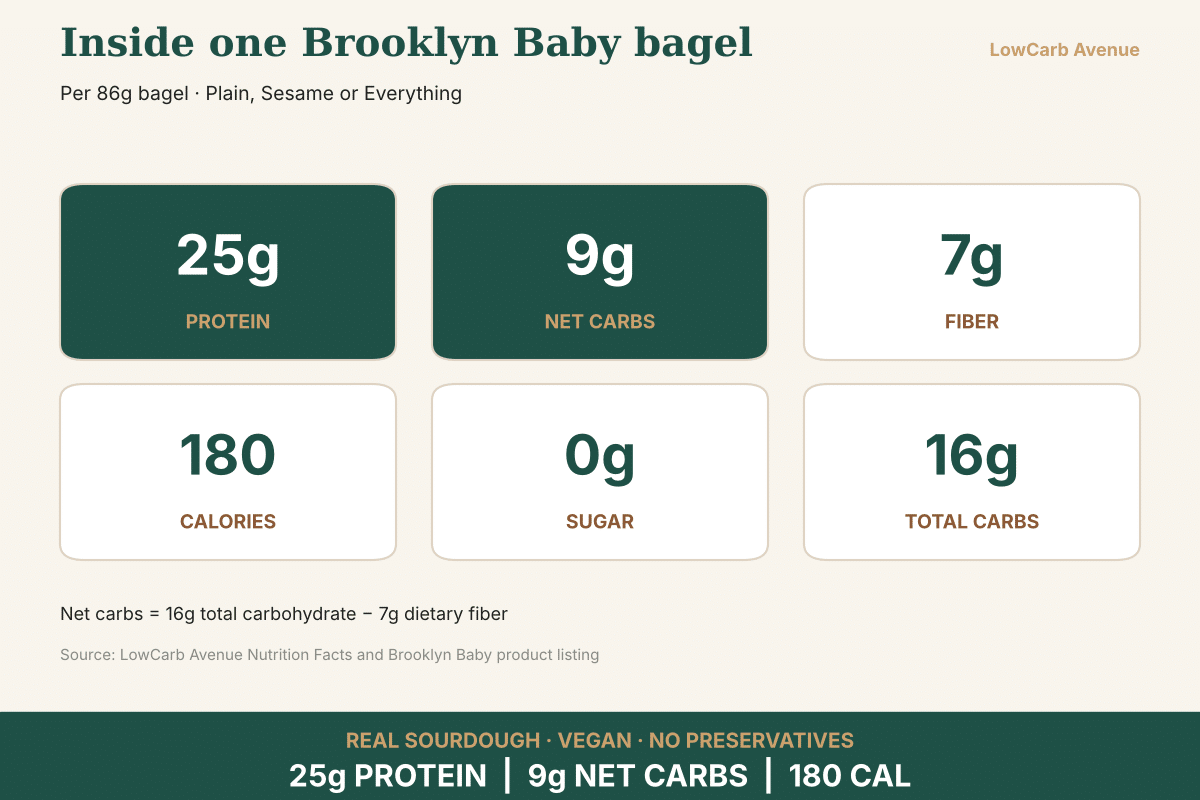
Brooklyn Baby Sourdough Bagels: 25g PROTEIN · 9g NET CARBS · 7g FIBER · 180 CAL · 0g SUGAR
Per 86-gram bagel · Plain, Sesame or Everything · Vegan · No preservatives
That’s roughly two and a half times the protein of a typical deli bagel, with a fraction of the net carbs.
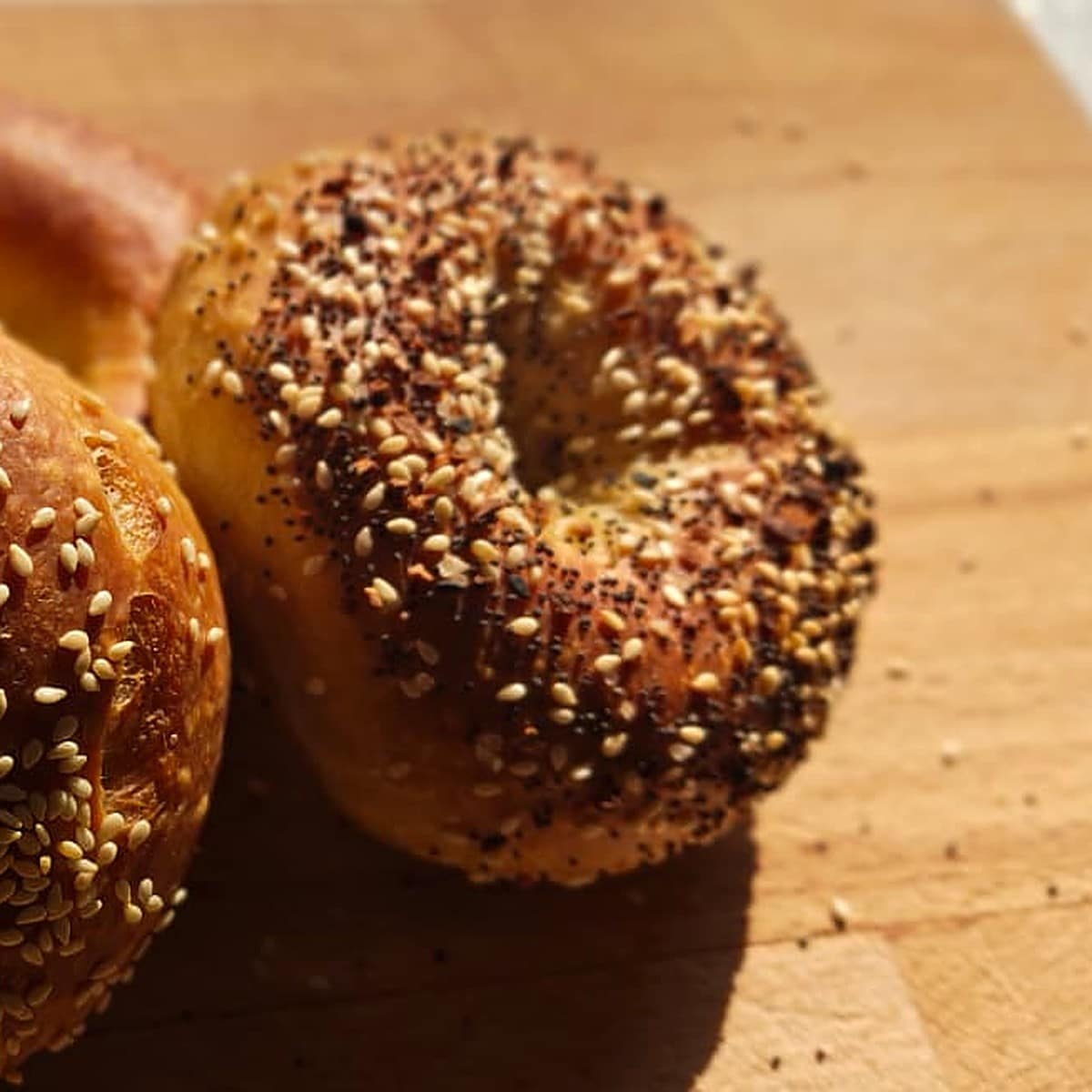
Toast one and add cream cheese and lox. Build a high-protein egg sandwich. Or eat it plain, warm, the way Kraków’s street vendors sold them. Because we bake without preservatives, freeze them as soon as they arrive; they toast perfectly straight from the freezer.
Shop Brooklyn Baby low carb sourdough bagels, browse all our low carb breads, or see the full label on our Nutrition Facts page.
Frequently Asked Questions
Boiling sets the starch on the outside of the dough into a firm skin before it goes into the oven. That skin keeps the bagel from rising too much, which creates its dense, chewy inside, and it bakes into the shiny, slightly blistered crust bagels are known for.
Long sourdough fermentation can break down some fructans, a type of FODMAP, which may make sourdough easier for some people to digest, and it adds flavor. But sourdough on its own doesn't make a bagel low carb or high protein, so check the nutrition label. Brooklyn Baby bagels pair real sourdough with a high-protein, high-fiber dough: 25g protein and 9g net carbs per bagel.
A medium plain bagel (about 105g) has roughly 55g of carbohydrate, 2 to 3g of fiber and about 11g of protein, according to USDA data. A Brooklyn Baby low carb sourdough bagel (86g) has 16g of carbohydrate, 7g of fiber (9g net carbs) and 25g of protein.
No one knows exactly. Written records from Kraków, Poland, mention bagels by 1610, and similar boiled ring breads such as the obwarzanek appear in records from 1394. The popular story that a Viennese baker invented the bagel in 1683 is a legend.
Sources
- Smithsonian Magazine. A Brief History of the Bagel.
- HISTORY. From New York to Montreal: What’s in a Bagel?
- National Geographic. The unusual history of the beloved bagel (2023).
- New York University. How the New York City Bagel Was Born (video, 2020).
- National Heart, Lung, and Blood Institute. Portion Distortion.
- Atkinson FS, Foster-Powell K, Brand-Miller JC. International tables of glycemic index and glycemic load values: 2008. Diabetes Care. 2008;31(12):2281-2283.
- Monash University. Sourdough processing and FODMAPs.
- U.S. Department of Agriculture. FoodData Central (plain bagel).
- LowCarb Avenue. Brooklyn Baby Sourdough Bagels, 12-pack and Nutrition Facts.