Sourdough Bread: Proven Low-Carb Benefits for Blood Sugar, Keto & Diabetics
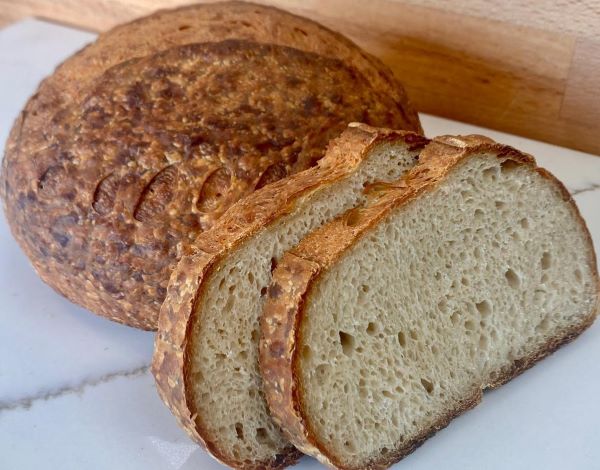
The sourdough paradox
If you are managing diabetes, prediabetes, or a ketogenic lifestyle, bread is probably the food you miss the most. Sourdough bread sits right at the heart of that nostalgia. It is the oldest leavened bread in the human record, tangy and chewy, with a reputation for being the “healthier” loaf on the bakery shelf. And the science does back much of that reputation — traditional sourdough fermentation genuinely changes how your body processes the bread.
But here is the paradox most readers don’t hear about. Even a well-made artisan sourdough can carry 18 to 24 grams of net carbs per slice. That is a real problem for anyone whose glucose or ketone levels have to stay in a narrow lane. You get the gentler blood sugar curve of fermentation… and you still get a significant carbohydrate dose. The solution that has emerged in the last few years is a new class of loaf: a properly fermented sourdough bread, engineered around high-fiber and high-protein flours, that keeps the flavor and the microbiology while stripping out most of the available carbohydrate. Low Carb Avenue’s keto sourdough bread — “Frankie,” 3 g net carbs and 6 g protein per slice — is a flagship example.
This article walks through what sourdough bread actually does inside the body, why regular sourdough is still a stretch for many diabetic and keto eaters, and what the science says when you put a low-carb sourdough bread alongside it. Three charts and three core scientific references are included. Feel free to share with your dietitian, your low-carb-curious partner, or anyone who has given up bread because of a glucose meter.
What makes sourdough bread different at the molecular level
Every loaf of true sourdough bread is a partnership between two microbes: wild yeast (Saccharomyces and other species) and lactic acid bacteria (LAB), mostly Lactobacillus and Fructilactobacillus strains that live in the starter. Commercial “fast” breads use a single strain of baker’s yeast to push CO₂ into the dough in under an hour. Sourdough ferments for 8 to 24 hours. In that window, three things happen that matter for your blood sugar:
- Lactic and acetic acids are produced by the LAB, lowering the dough pH to roughly 3.8–4.5. That acid slows down salivary and pancreatic amylase — the enzymes that chop starch into glucose — when you later eat the bread. Less glucose hits the bloodstream, and it hits more slowly.
- Starch structure is rearranged. Part of the rapidly-digestible starch is converted into resistant starch and starch-lipid complexes that the small intestine cannot absorb. These reach the colon intact, where they become food for beneficial gut bacteria.
- Phytate is broken down. Whole-grain flours are high in phytic acid, which locks up iron, magnesium, calcium, and zinc. The acidic sourdough environment activates the grain’s own phytase enzyme, freeing those minerals for absorption — by as much as 70–90% in reconstituted whole-wheat flour.
The short version: fermentation does not delete the carbohydrate in sourdough bread, but it does change how that carbohydrate behaves. A 2023 review in Frontiers in Nutrition put it plainly — the beneficial profile is “consistent, but modest” when the flour is still a typical refined or whole-wheat flour. The magnitude of the benefit depends heavily on what you bake with.
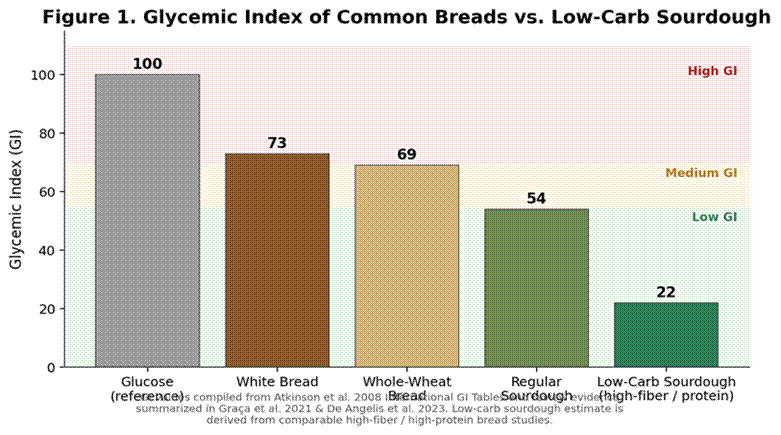
Figure 1. Glycemic Index (GI) of common breads vs. low-carb sourdough bread.
Figure 1 summarizes GI values that have been measured repeatedly in the peer-reviewed literature. Glucose is the reference at 100. White bread lands in the low-70s. Traditional sourdough, depending on flour and fermentation time, falls in the mid-50s — officially “low GI.” A properly engineered low-carb sourdough bread, with most of the refined starch replaced by high-fiber wheat flour and wheat protein, drops further into the low-20s range, because there is simply less available starch to digest in the first place.
Scientific reference #1: sourdough and impaired glucose tolerance
One of the most frequently cited clinical trials on sourdough is Maioli and colleagues (Acta Diabetologica, 2008). The researchers recruited volunteers with impaired glucose tolerance — the stage just before type 2 diabetes — and asked them to eat two test meals that were identical in weight, fiber, and macronutrients, differing only in leavening: one was baker’s-yeast bread, the other was sourdough-fermented bread from the same flour.
The sourdough version produced a significantly lower two-hour blood glucose area under the curve, and — crucially — a lower insulin response as well. In practical terms, the pancreas was asked to do less work for the same meal. The authors concluded that sourdough fermentation may be a useful dietary strategy in prediabetic subjects. A 2022 systematic review published in Nutrients (Ribet et al., PubMed ID 35943419) extended that finding across 18 trials: sourdough bread consistently produced a smaller postprandial glucose rise at both 60 and 120 minutes compared with matched industrial or baker’s-yeast loaves.
“Sourdough-leavened bread improves postprandial glucose and insulin plasma levels in subjects with impaired glucose tolerance.” — Maioli et al., Acta Diabetologica, 2008
The catch: carb load still matters
A low glycemic index is helpful, but it is not the same thing as a low carbohydrate count. This is where many diabetic-friendly bread recommendations get tangled. The glycemic index measures how fast a fixed 50-gram dose of carbohydrate raises your blood sugar. It does not measure how much carbohydrate is in your slice. That is the job of the glycemic load — GI multiplied by the grams of carbohydrate in your actual portion — and glycemic load is what drives real-world post-meal spikes.
Two slices of traditional artisan sourdough can deliver 35–45 grams of net carbs. For someone with type 2 diabetes targeting a post-meal reading under 140 mg/dL, that is often over the line even before the rest of the plate arrives. For a ketogenic eater aiming for 20–50 g net carbs per day, it is effectively the entire daily budget, and in a single meal.
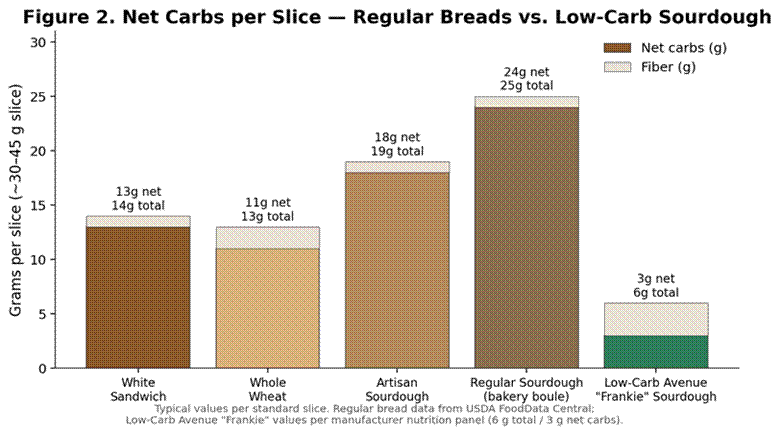
Figure 2. Net carbs per slice: typical breads vs. Low Carb Avenue “Frankie” sourdough.
Figure 2 lines this up visually. The low-carb sourdough bread delivers roughly one-eighth of the carbohydrate of a bakery boule, while preserving the crust, the crumb, and the tang. That is the mechanical reason a product like Frankie can fit into diets that have been closed to bread for years.
How Low Carb Avenue engineers its sourdough bread
The team at Low Carb Avenue publishes a deliberately short ingredient list: water, a blend of high-fiber wheat flour and wheat protein, olive oil, and sea salt, then a wild-fermented starter. There is no modified wheat starch, no resistant dextrin, no chemically altered fiber, and no added sugar. Two key design choices do most of the heavy lifting.
First, the flour system. Conventional sourdough relies on ~12% protein bread flour that is roughly 70% starch. The Low Carb Avenue base swaps much of that starch for high-fiber wheat flour. Fiber is a carbohydrate your body doesn’t absorb, and protein (gluten) is not a blood-glucose carbohydrate at all. Per slice, that gets you from roughly 20 g of available carbs to about 3 g.
Second, a full traditional fermentation is maintained — the same lactic acid bacteria, the same 8–18 hour bulk fermentation, the same slow cold retard. This preserves the tang, the crust, and importantly the fermentation-driven health effects described above: organic-acid-mediated slowdown of amylase, resistant starch formation, and phytate degradation. The bread is baked fresh twice a week with no preservatives; according to the manufacturer’s page, the “Frankie” New York-style loaf delivers 3 g net carbs, 6 g protein, and zero sugar per slice.
A useful way to think about it: a traditional sourdough is a fermented starch food with a gentler curve. A low-carb sourdough bread is a fermented fiber-and-protein food with the same gentle curve on top of a drastically smaller carbohydrate base.
Head-to-head: regular sourdough bread vs. low-carb sourdough bread
The table below consolidates the differences that matter most for diabetic and keto eaters. Numbers for regular sourdough reflect typical artisan bakery values (USDA FoodData Central, 2024); numbers for low-carb sourdough reflect the published Low Carb Avenue nutrition panels.
| Attribute | Regular Sourdough Bread | Low-Carb / Keto Sourdough Bread (e.g., Low Carb Avenue) |
| Net carbs per slice | ~18–24 g | ~3 g (Frankie) — roughly an 85% reduction |
| Fiber per slice | 1–3 g (often refined flour) | High-fiber wheat flour blend, typically 3–7 g |
| Protein per slice | ~3–5 g | 6–7 g (added wheat protein) |
| Estimated GI | ~54 (low-to-medium) | ~20–30 (low) — fewer available carbs + fermentation |
| Fermentation | Wild yeast + lactic acid bacteria (traditional) | Same traditional fermentation — the flavor profile is preserved |
| Added sugar | Usually 0 g, but starch still digests to glucose | 0 g added sugar, minimal starch load |
| Keto compatible? | Not at typical serving sizes | Yes — fits a daily 20–50 g carb ceiling |
| Diabetic-friendly? | Gentler than white bread, still raises glucose | Far smaller post-meal glucose excursion |
| Ingredient profile | Flour, water, salt, starter | Clean label: water, high-fiber wheat flour, wheat protein, olive oil, sea salt |
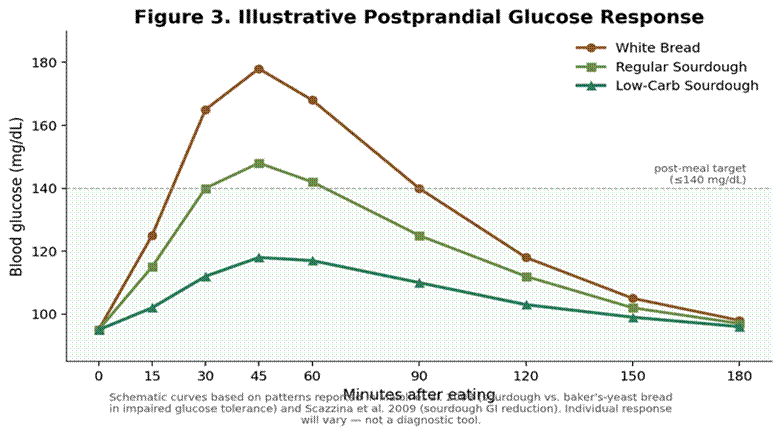
Figure 3. Illustrative postprandial blood-glucose response after eating each bread.
Figure 3 visualizes the clinical pattern from Maioli (2008) and Scazzina (2009) applied to the three bread types. White bread produces a sharp spike often crossing the post-meal target line. Traditional sourdough tracks similarly in shape but with a meaningfully lower peak. A low-carb sourdough bread barely lifts off baseline because there is so little available starch for the amylase to work on. For someone monitoring continuous glucose data, this is the difference between a 60-point excursion and a 20-point ripple.
Scientific reference #2: carbohydrate restriction in type 2 diabetes
The bread you choose matters, but it sits inside a larger dietary pattern. A 2023 overview of meta-analyses published in Nutrients (PMC12362953) pulled together the evidence on low-carbohydrate diets as a treatment for type 2 diabetes. Across 17 randomized controlled trials and nearly 1,200 participants, low-carb eating reduced HbA1c by roughly 0.29 to 0.65 percentage points at 3–6 months, alongside meaningful improvements in fasting glucose, triglycerides, and body weight. The T2Diet Study in Nutrition & Diabetes (2023) reported the strongest signal at 16 weeks: −0.65% HbA1c versus controls, with many participants reducing their anti-glycemic medications.
A 2024 meta-analysis in Frontiers in Nutrition specifically examined overweight and obese T2DM patients and confirmed favorable changes in both glucose and lipid metabolism on low-carbohydrate plans. The emerging consensus is that low-carb eating is not a fad — it is an evidence-supported option, particularly in the first year and particularly in people earlier in their diabetes journey.
“Low-carbohydrate diets resulted in significant reductions in HbA1c levels in 16 of 21 studies, indicating substantial short-term improvements in glycemic control.” — Overview of meta-analyses, PMC12362953 (2023)
Scientific reference #3: the ketogenic diet and glycemic control
A 2020 meta-analysis of clinical trials on the ketogenic diet in diabetes (Yuan et al., Nutrition & Diabetes; PubMed 33257645) found mean reductions of 1.29 mmol/L (about 23 mg/dL) in fasting glucose and 1.07 percentage points in HbA1c on well-formulated keto plans. Further systematic reviews (2022–2024) report that ketogenic eating also drives substantial weight loss, reduces triglycerides, and raises HDL cholesterol. Longer-term data is more mixed — the glycemic advantage attenuates as adherence slips, which is exactly the reason eating strategies that feel sustainable, including low-carb sourdough bread, matter so much.
In other words, the research supports both the direction (reduce carb load) and the mechanism (fermentation slows starch digestion). A low-carb sourdough bread is a rare product that sits at the intersection of those two ideas rather than forcing a choice between them.
Beyond blood sugar: gut, minerals, and satiety
Two less-discussed benefits deserve a paragraph each. The first is mineral bioavailability. Lopez and colleagues (Journal of Agricultural and Food Chemistry, 2003) measured a 71% reduction in phytate content in sourdough bread compared with 52% in standard yeast bread, and showed that this translated into measurably higher magnesium and iron absorption in rats. For older adults and for anyone on a restrictive diet, this “hidden” nutritional gain is real.
The second is the gut microbiome. Lactic acid bacteria in the starter, together with any resistant starch that survives baking, deliver fermentable substrate to the colon. Colonic microbes turn that substrate into short-chain fatty acids — butyrate, acetate, propionate — which nourish the cells of the gut lining, reinforce the gut barrier, and reduce low-grade inflammation. A 2022 mouse feeding study in Frontiers in Microbiology reported measurable shifts in microbiome composition and metabolic markers after eight weeks of sourdough bread feeding. Human data is earlier-stage, but directionally consistent.
A third, more practical benefit is satiety. The combination of higher protein, higher fiber, and slower starch hydrolysis extends the time before hunger returns. Most keto customers describe a low-carb sourdough bread sandwich as “filling in a way regular bread never was” — that is the protein and fiber doing the work.
Practical tips for diabetic, sugar-sensitive, and keto eaters
- Pair your slice with protein and fat. Even a low-carb sourdough bread flattens the glucose response further when eaten with eggs, avocado, cheese, salmon, or nut butter. The fat slows gastric emptying.
- Toast it. Cooling and reheating resistant starch (the “retrogradation” effect) can nudge the available carbohydrate down by another small increment, and toasting rebuilds the crust.
- Use a continuous glucose monitor (CGM) if you have access. Bread response is one of the most individual dietary variables in the nutrition literature — your own two-hour curve is more reliable than any label.
- Respect the freezer. Because Low Carb Avenue sourdough bread contains no preservatives, the manufacturer recommends eating or freezing within 6 days. Frozen, it keeps 6–12 months; pull out slices as needed.
- Track total daily carbs, not “whether bread is allowed.” Three grams net per slice means two slices a day is about 6 g — comfortably inside even a strict 20 g ketogenic ceiling.
- If you are on insulin, retest your carb-to-insulin ratio when switching breads. Low-carb sourdough bread often needs considerably less mealtime insulin than a comparable portion of traditional bread.
Safety and caveats
Low-carb sourdough bread is a wheat product. It contains gluten and is not suitable for anyone with celiac disease or medically confirmed non-celiac gluten sensitivity. Anyone taking insulin or sulfonylurea medications who changes their carbohydrate intake should do so in dialogue with their clinician, because medication doses typically need to come down to avoid hypoglycemia. And although the science on low-carb and ketogenic eating is encouraging, individual responses vary; no single food, however well engineered, replaces medical care, activity, and sleep.
Bringing it home
Sourdough bread has been on the human table for thousands of years because it works — the fermentation is kind to the gut, kind to the glucose curve, and kind to the flavor. What has changed recently is our ability to combine that ancient fermentation with modern flour science, so that a slice of sourdough bread can be both delicious and compatible with diabetic, sugar-sensitive, and ketogenic eating. You don’t have to give up bread. You just need a different kind of loaf.
If you would like to try the Low Carb Avenue keto sourdough bread range — Frankie (New York-style tang, 3 g net carbs) or Elodie (Parisian sandwich loaf) — you can see the full lineup, ingredients, and ordering options at lowcarbavenue.com/sourdough-bread. It may be the best-feeling sandwich you’ve had since your diagnosis.
Editorial note: This article is for educational purposes and is not medical advice. Always consult a qualified healthcare provider before changing your diet, especially if you manage diabetes, kidney disease, or any condition where dietary changes carry medical risk.
Share this article
All 11 platforms — same as the TrueCarbs app.
Pick a platform to share — link copies to clipboard for unsupported channels.