
Keto vs. Low-Carb: What’s the Difference and Which Fits You?
Keto is a very strict form of low carb. A ketogenic diet usually keeps carbs between 20 and 50 grams a day so your body shifts to burning fat and making ketones, while a general low-carb diet simply means eating under about 130 grams a day [1]. Both can work. The better fit is the one that suits your health, your goals and the way you actually like to eat.
The quick definitions
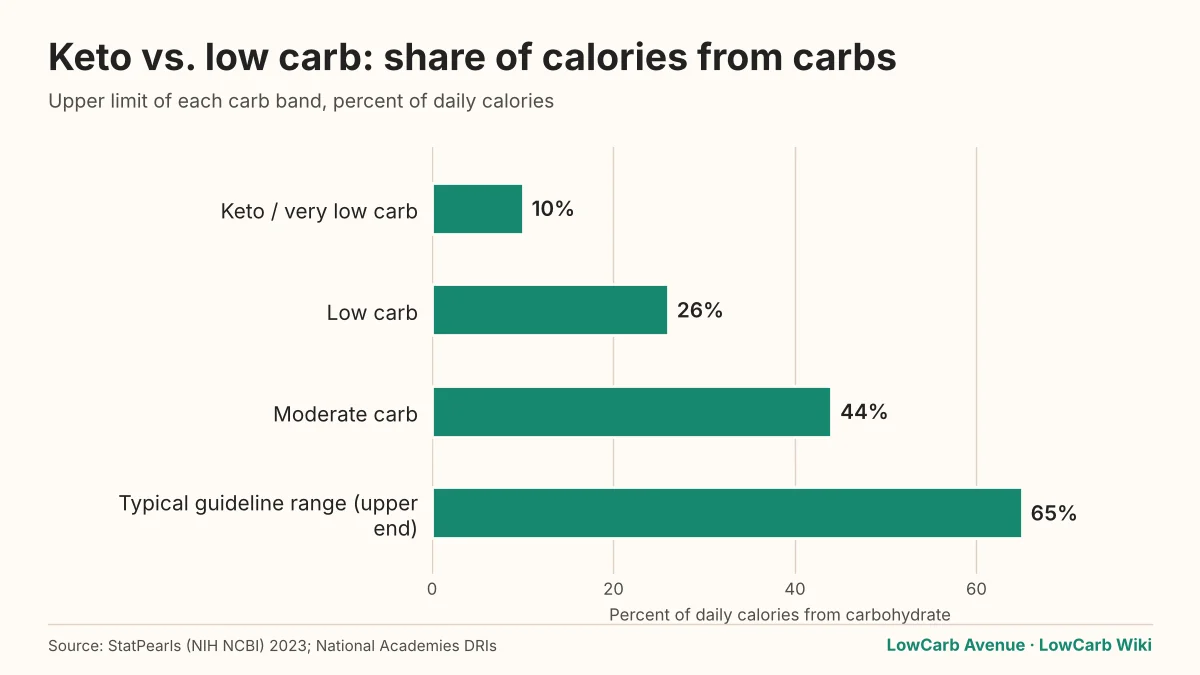
Neither term has one legal or official definition, so you’ll see different numbers online. Here’s how an NIH clinical review groups them [1], alongside the macronutrient split Harvard’s Nutrition Source describes for popular keto plans [2]:
| Keto (very low carb) | Low carb | |
|---|---|---|
| Carbs per day | 20-50 g [1][2] | Under 130 g [1] |
| Share of calories from carbs | Under 10% [1] | Under 26% [1] |
| Fat | About 70-80% of calories [2] | Flexible |
| Protein | About 10-20% of calories [2] | Flexible, often higher |
| Main goal | Reach and stay in ketosis | Cut refined carbs and sugar |
| Food flexibility | Tight: little fruit, no grains or legumes [2] | Moderate: room for berries, beans, some whole grains or low-carb bread |
For context, the National Academies suggest most adults get 45% to 65% of calories from carbohydrate and set a Recommended Dietary Allowance of 130 grams a day [3]. So “low carb” starts right around that recommended floor, and keto sits well below it.
What actually happens in your body
On keto
When carbs stay very low, your body runs through its stored glucose and starts relying on fat for fuel. Harvard’s Nutrition Source says this shift happens after about three to four days of very low carb intake, though timing varies by person [2]. Your liver turns fat into ketones, which your brain and muscles can use. This is called nutritional ketosis, and it isn’t the same as diabetic ketoacidosis, a medical emergency that involves far higher ketone levels plus dangerous acidity [1].
On a general low-carb diet
With a looser limit, most people don’t stay in steady ketosis. The benefits come mainly from cutting sugary drinks, sweets and refined starches, which helps blood sugar stay steadier after meals. If you’re new to tracking, our guide to net carbs explains how to count without getting lost in the math.
What the research says
Weight loss
Keto doesn’t seem to have a magic edge over time. Harvard’s review describes a meta-analysis of 13 trials in which keto produced about 2 pounds more weight loss than a low-fat diet at one year, but no difference at two years, with adherence dropping over time [2]. In the year-long DIETFITS trial of 609 adults, a healthy low-carb diet and a healthy low-fat diet produced similar median weight loss: 6.0 kg and 5.3 kg [4].
Blood sugar
The American Diabetes Association says reducing overall carbohydrate intake has the most evidence for improving blood sugar, and it lists low-carb eating as one reasonable option. It also notes that long-term benefit from very low-carb diets isn’t convincing, mainly because people find them hard to stick with [5].
The Stanford Keto-Med trial tested this head-to-head. Thirty-three adults with prediabetes or type 2 diabetes completed 12 weeks of a well-formulated keto diet (20-50 g carbs a day) and 12 weeks of a Mediterranean-style diet that also cut added sugars and refined grains [6]. HbA1c fell 9% on keto and 7% on the Mediterranean-style plan, a difference that wasn’t statistically significant. Weight dropped 8% and 7% [6].
Cholesterol
Here’s where the two split. In Keto-Med, LDL cholesterol rose 10% on keto but fell 5% on the Mediterranean-style diet. Triglycerides fell more on keto (16% vs. 5%), and HDL rose on both [6]. The NIH review adds that some people see a large LDL jump on very low-carb diets and suggests checking lipids before and during [1].
Nutrients and fiber
Because keto cuts out fruit, legumes and grains, it can leave gaps. Keto-Med participants got less fiber, folate, vitamin C and magnesium on keto [6], and Harvard flags fiber, B vitamins, iron, magnesium and zinc as nutrients to watch [2]. For reference, the FDA’s Daily Value for fiber is 28 grams [7]. Our article on fiber on a low-carb diet covers practical ways to get there.
Side effects and staying power
The so-called keto flu (headache, tiredness, brain fog, constipation, muscle cramps) is more common when carbs drop sharply. A 2025 scoping review found these symptoms usually start within two to three days of beginning keto and mostly fade within two to four weeks [8]. A gentler low-carb approach often softens that transition.
Sustainability matters just as much. After Keto-Med ended, participants could eat however they liked. Their diets looked more like the Mediterranean-style plan than keto, and the researchers concluded the less restrictive option was more sustainable [6].
What a day looks like on each
The difference shows up most clearly on your plate. Here’s a rough sketch of how the same day might play out:
- Breakfast. Keto: eggs scrambled in butter with spinach and cheese. Low carb: the same eggs plus a slice of low-carb toast and a handful of berries.
- Lunch. Keto: a big salad with salmon, avocado and olive oil dressing. Low carb: a turkey sandwich on low-carb bread with a side salad.
- Dinner. Keto: chicken thighs with roasted broccoli. Low carb: chicken with broccoli and a small scoop of beans or lentils.
Both days skip sugary drinks and refined starches. Keto simply leaves less room for fruit, legumes and grain-based foods.
Which one fits you?
Keto might suit you if:
- You like clear, strict rules and don’t mind tracking closely
- You’ve tried a moderate approach and it didn’t hold your interest
- Your doctor supports it and will monitor your bloodwork
A general low-carb diet might suit you better if:
- You want more variety, including berries, beans and some bread
- You eat out, travel or cook for a family often
- You’re looking for a pattern you can keep for years, not weeks
- You’d rather not see your LDL cholesterol climb
Plenty of people start with low carb, see how they feel, and only go lower if they want to. Our two-week beginner’s guide is a good place to start.
Check with your doctor first if…
Talk with a doctor or registered dietitian before starting either plan if you take insulin or other diabetes medication, take blood-pressure medication, are pregnant, or have kidney disease. Lower carb intake can lower blood sugar quickly, and medications may need adjusting [1][5]. The NIH review also urges caution about combining ketogenic diets with SGLT2 inhibitor drugs [1].
Where LowCarb Avenue fits
Whether you go keto or simply lower carb, bread is usually the first thing people miss. LowCarb Avenue bakes clean-label low-carb and keto bread with fiber and protein built in, so a sandwich, toast or bagel can still fit your plan. Our lineup includes Wilbur multigrain, Frankie sourdough, Elodie sourdough sandwich bread and Brooklyn Baby bagels. As with any food, check the label against your own daily carb target. Shop LowCarb Avenue bread and bagels.
Frequently asked questions
Is keto the same as low carb?
Keto is a type of low-carb diet, but a much stricter one. Keto usually keeps carbs at 20 to 50 grams a day to reach ketosis, while low carb generally means anything under about 130 grams a day.
Which is better for weight loss, keto or low carb?
Research doesn't show a clear long-term winner. Keto may lead to slightly faster early weight loss, but at one to two years results tend to look similar to other well-planned diets. The plan you can stick with usually matters most.
Can you eat bread on keto?
Regular bread usually doesn't fit keto's 20 to 50 gram daily carb range, but some low-carb and keto breads can. Check the label for total carbs, fiber and serving size, and make sure it fits your daily target.
Does keto raise cholesterol?
It can for some people. In the Stanford Keto-Med trial, LDL cholesterol rose about 10% on keto. Triglycerides fell and HDL rose. Ask your doctor about checking your lipids before and during a keto diet.
Sources
- Low-Carbohydrate Diet (StatPearls).
- Diet Review: Ketogenic Diet for Weight Loss.
- Dietary Reference Intakes for Energy, Carbohydrate, Fiber, Fat, Fatty Acids, Cholesterol, Protein, and Amino Acids (DRI summary tables).
- Effect of Low-Fat vs Low-Carbohydrate Diet on 12-Month Weight Loss in Overweight Adults: The DIETFITS Randomized Clinical Trial (Gardner CD et al.), JAMA 319(7):667-679.
- Nutrition Therapy for Adults With Diabetes or Prediabetes: A Consensus Report (Evert AB et al.), Diabetes Care 42(5):731-754.
- Effect of a ketogenic diet versus Mediterranean diet on glycated hemoglobin in individuals with prediabetes and type 2 diabetes mellitus: The interventional Keto-Med randomized crossover trial (Gardner CD et al.).
- Daily Value on the Nutrition and Supplement Facts Labels.
- Symptoms during initiation of a ketogenic diet: a scoping review of occurrence rates, mechanisms and relief strategies (Skartun O et al.), Frontiers in Nutrition 12.
This article is for general education and is not medical advice. Talk with your doctor or a registered dietitian before changing your diet, especially if you take medication for diabetes or blood pressure. How we research and write.